

Why a Level Driveway Matters More Than You Think
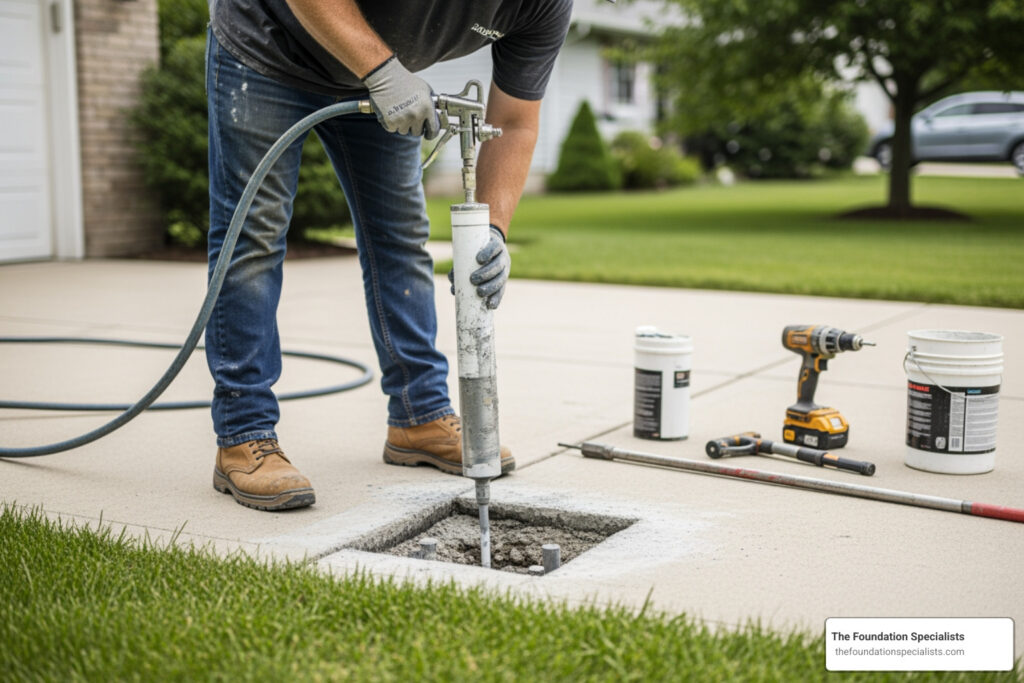
Concrete driveway leveling is the process of lifting and stabilizing sunken or uneven concrete slabs back to their original position without full replacement. Here’s what you need to know:
Main Leveling Methods:
- Mudjacking – Costs $3-6 per square foot, uses cement slurry, heavier material
- Polyurethane Foam Injection – Costs $5-25 per square foot, lightweight foam, cures in 15-30 minutes
- Full Replacement – Costs $5,000+, necessary only for severely damaged concrete
Key Benefits:
- Saves 50-70% compared to full replacement
- Most jobs complete within a few hours
- Can last 20-50+ years with proper maintenance
- Minimal disruption to your property
If your driveway is sinking, cracking, or collecting water, you’re not alone. Concrete settles over time due to soil erosion, poor drainage, and ground movement. A settled driveway is more than an eyesore; it can lead to water pooling near your foundation, create trip hazards, and lower your property value. Ignoring the problem only makes it worse.
The good news is you likely don’t need a full replacement. The cost to level a driveway typically ranges from $800 to $4,000, far less than the expense of replacement. Modern methods can restore your driveway in hours, with the surface ready for same-day use.
This guide covers everything you need to know about concrete driveway leveling, from methods and costs to deciding the best path for your home.
I’m Dylan Morris, Marketing Director at TFS – The Foundation Specialists. With a decade of experience in Concrete driveway leveling and foundation repair, my goal is to help you make an informed decision that protects your home and budget.
Why Your Driveway is Sinking and When to Act
Your driveway takes a lot of abuse, and over time, issues can arise. The problem with a sinking driveway isn’t the concrete; it’s the soil underneath. When the soil becomes compromised, the concrete slabs lose support and begin to settle, crack, or tilt.
Here are the primary culprits:
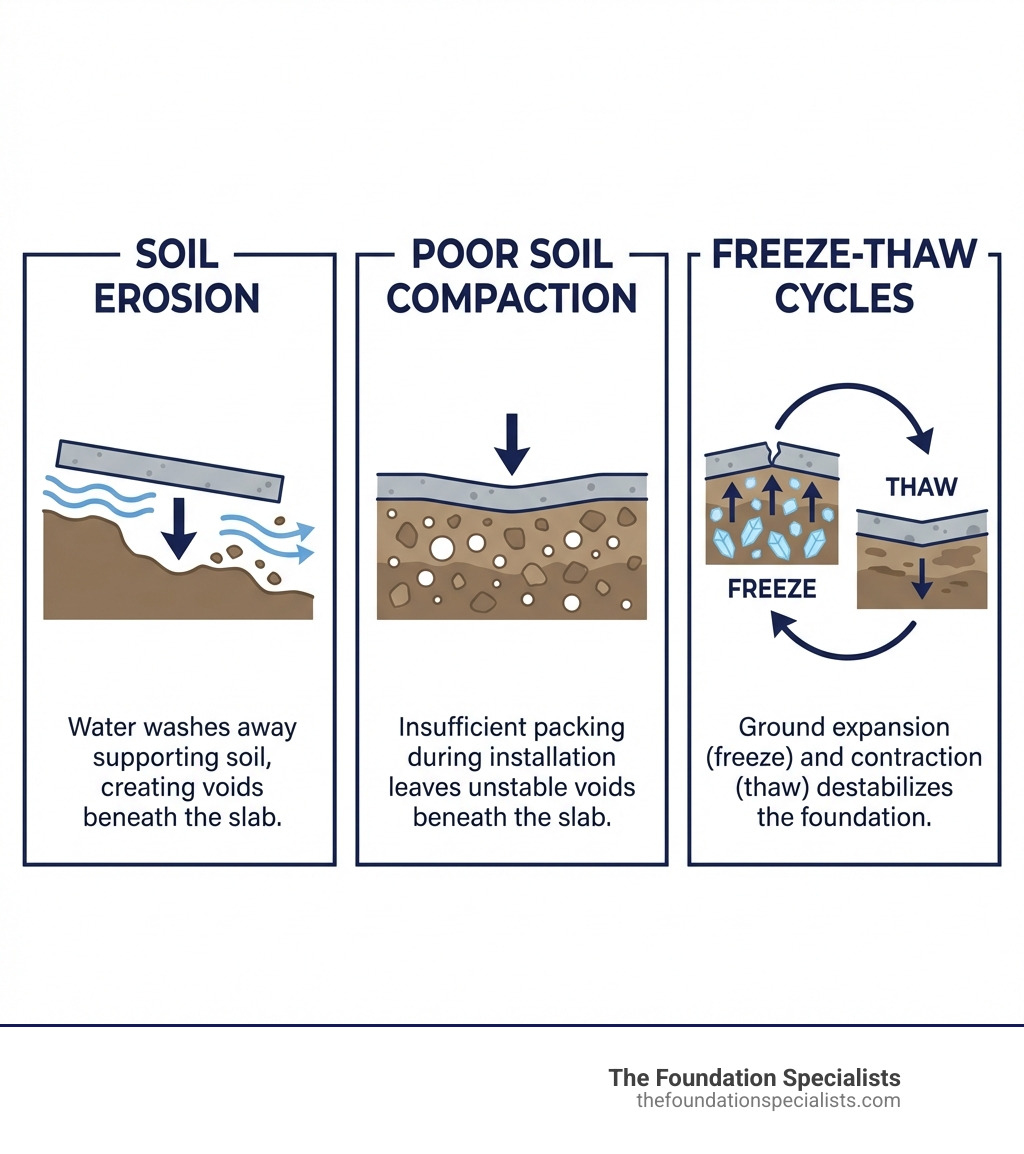
- Soil Erosion: Rainwater from poor drainage can wash away soil from under the slab, creating voids that lead to sinking.
- Poor Soil Compaction: If the soil wasn’t properly compacted during installation, it will settle over time, causing the concrete above to become uneven.
- Expansive Soils: Common in Tennessee, Kentucky, and Alabama, clay soils swell when wet and shrink when dry. This movement stresses the concrete, causing it to shift and crack.
- Freeze-Thaw Cycles: In colder regions like parts of Kentucky and Indiana, water freezes and expands in the soil, destabilizing the ground beneath the driveway.
- Tree Root Intrusion: Growing tree roots can lift slabs, while decaying roots can leave voids, causing them to sink.
- Heavy Loads: Consistently parking heavy vehicles can stress the slab and accelerate settlement, especially on weak soil.
Watch for these 5 key warning signs that your driveway needs concrete driveway leveling:
- Noticeable Cracks: Large, spreading cracks that create uneven edges are a clear sign of settlement.
- Uneven Sections or Slabs: One part of your driveway being higher or lower than another indicates a shift in the ground beneath.
- Water Pooling: Puddles that form after rain show that sections have sunk, preventing proper drainage and potentially directing water toward your foundation.
- Trip Hazards: Even a small difference in height between slabs can create a dangerous tripping hazard.
- Gaps Under the Slab: Visible voids under the edge of a slab are a tell-tale sign that soil has eroded away.
Addressing these issues promptly can save you money and headaches. Early action prevents minor problems from becoming major, costly repairs, and helps maintain the safety and value of your home.
Concrete Driveway Leveling Methods: A Head-to-Head Comparison
When your driveway starts to sink, you have two main leveling options: traditional mudjacking or modern polyurethane foam injection. Each has a unique approach to lifting and stabilizing concrete, also known as slabjacking or concrete lifting.
| Feature | Mudjacking | Polyurethane Foam Injection |
|---|---|---|
| Process | Pumps a cement-based slurry under the slab to lift it. | Injects expanding high-density polyurethane foam under the slab. |
| Hole Size | Larger holes, typically 1.5 to 3 inches in diameter. | Smaller, dime-sized holes (approx. ⅝ inches). |
| Material | Heavy cement, water, soil, and sand mixture (slurry). | Lightweight, strong, high-density polyurethane foam. |
| Cure Time | Extended curing time, often days, before heavy use. | Cures within 15-30 minutes, allowing same-day use. |
| Weight | Adds significant weight to the existing soil, potentially causing resinking. | Extremely lightweight, putting less stress on unstable soil. |
| Longevity | Can be long-lasting, but material can wash out, leading to future settlement. | Long-lasting, waterproof, non-degrading, stabilizes soil. |
| Environmental Impact | Uses natural materials, but can be messy; material can wash out. | Considered environmentally friendly, inert once cured; cleaner process. |
The Traditional Method: Mudjacking
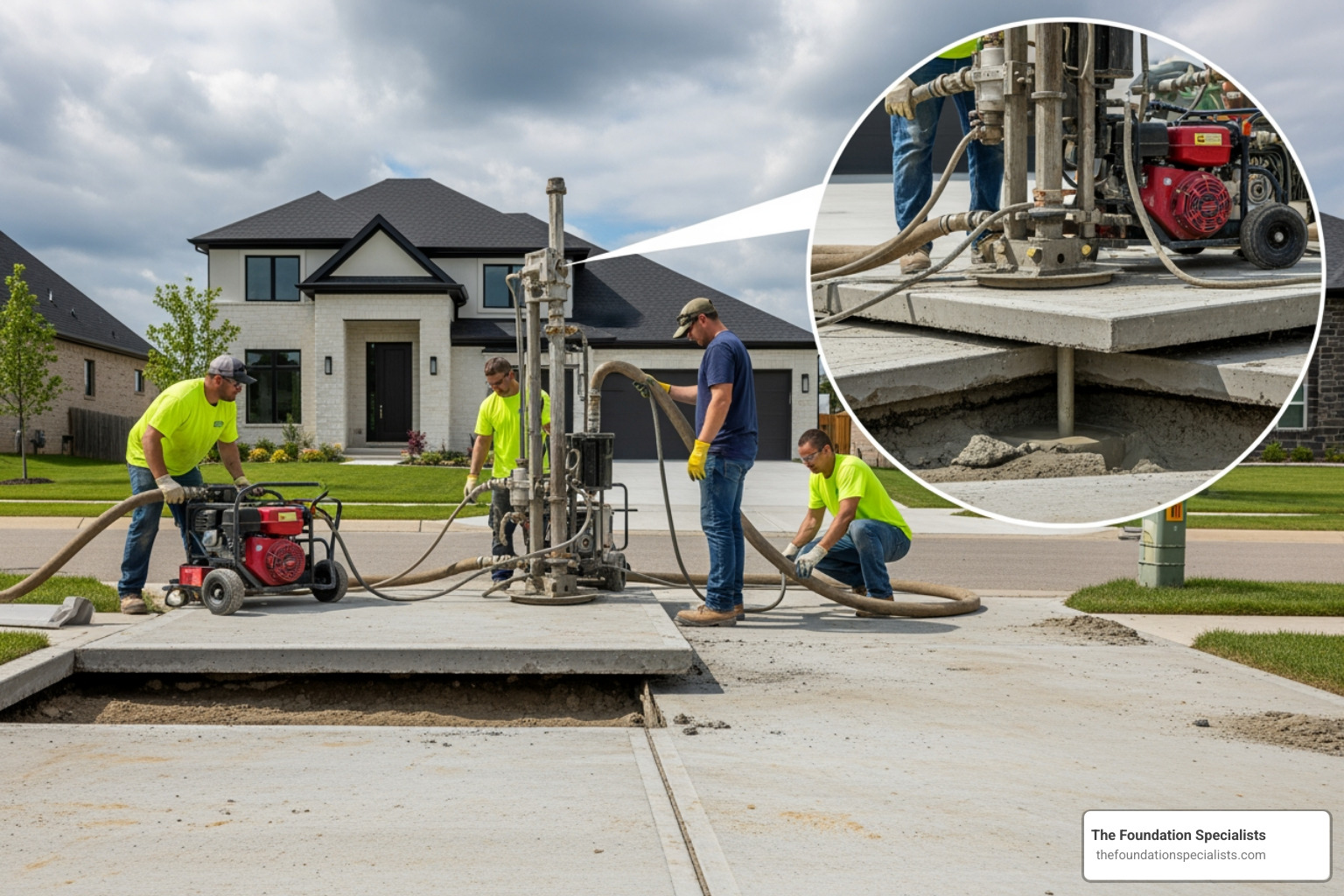
Mudjacking, or slabjacking, is the older method. It involves drilling holes (1.5 to 3 inches) into the slab and pumping a cement slurry underneath. This mixture of cement, water, soil, and sand fills voids and lifts the concrete.
Pros of Mudjacking:
- Lower Upfront Cost: Generally costs less than foam, at $3 to $6 per square foot.
- Natural Materials: The slurry is made from common, natural materials.
Cons of Mudjacking:
- Heavy Material: The slurry adds significant weight to already unstable soil, which can cause future sinking.
- Larger Holes: The injection holes are more noticeable after being patched.
- Longer Cure Time: The driveway may be unusable for several days while the material hardens.
- Potential for Washout: The material can erode over time if exposed to water, leading to new settlement.
The Modern Solution: Polyurethane Foam Injection
Polyurethane foam injection (polyjacking) is a technologically advanced approach to concrete driveway leveling. This method uses small, dime-sized holes (about ⅝ inches) to inject a high-density polyurethane foam. The foam expands to fill voids, lifting the slab and stabilizing the soil beneath it.
Pros of Polyurethane Foam Injection:
- Lightweight: The foam adds almost no weight, reducing the risk of future settlement.
- Quick Cure Time: The driveway is typically ready for use just 15-30 minutes after the job is complete.
- Minimal Disruption: The small injection holes are nearly invisible once patched.
- Waterproof & Durable: Cured foam is waterproof and won’t wash away or degrade, providing a long-lasting solution.
- Soil Stabilization: The foam compacts loose soil as it expands, increasing the ground’s load-bearing capacity.
- Precise Lifting: The process allows for a highly controlled lift, preventing over-lifting.
Cons of Polyurethane Foam Injection:
- Higher Upfront Cost: This method is more expensive, ranging from $5 to $25 per square foot.
- Not a Cure-All: Like mudjacking, it cannot fix severely shattered or crumbling concrete.
At The Foundation Specialists, we often use advanced polyurethane foam technology, such as Supportworks PolyLevel is a lightweight, strong high-density polyurethane foam, because we believe it offers the most reliable, long-lasting results for our customers across Tennessee, Alabama, Kentucky, and Indiana.
Leveling vs. Replacement: A Cost and Value Analysis
When faced with an uneven driveway, the big question is whether to level or replace it. For most homeowners, concrete driveway leveling is the smarter choice, offering significant advantages in cost, time, and convenience.
Leveling can cost up to 70% less than full replacement. A replacement can easily cost $5,000 or more, while leveling typically falls between $750 and $6,000+. Leveling is also much faster. Most jobs are done in a few hours, and with polyurethane foam, the driveway is ready for use the same day. Replacement is a multi-stage process involving demolition, pouring, and a long curing period (up to 30 days), causing major disruption. Leveling is also less invasive, preserving your landscaping and avoiding the environmental impact of sending old concrete to a landfill.
Understanding the Costs of Concrete Driveway Leveling
The cost to level a driveway typically ranges from $800 to $4,000 or higher, influenced by several factors:
- Slab Size and Scope: A larger area generally costs more, but the amount of material needed is a bigger factor.
- Void Depth: A deep void requires more material to fill and lift the slab, increasing the cost.
- Site Accessibility: Difficult-to-access areas may increase labor costs.
- Material Choice: Polyurethane foam ($5-$25/sq ft) costs more than mudjacking ($3-$6/sq ft) but offers greater longevity and benefits.
- Additional Repairs: Sealing cracks after leveling will be an additional cost.
- Location: Labor and material costs vary by region, including our service areas in Tennessee, Alabama, Kentucky, and Indiana.
- Minimum Service Charges: Most contractors have a minimum charge (often $300-$2,000) to cover fixed costs for small jobs.
To get an accurate estimate, we always recommend getting multiple quotes from reputable contractors in your area.
When is Full Replacement the Better Option?
While concrete driveway leveling is often ideal, full replacement is necessary in certain situations. Consider replacement if your driveway has:
- Severely Cracked or Shattered Slabs: If the concrete is broken into many small pieces, it lacks the integrity to be lifted.
- Crumbling or Spalling Surface: Leveling lifts the slab but doesn’t fix surface deterioration. If the concrete is flaking or pitting, it’s a sign of disintegration.
- Widespread Structural Failure: If the damage goes beyond simple sinking, replacement is the only option.
- Desire for a New Design: If you want to change the layout or size of your driveway, you’ll need to start fresh.
- Original Pour Was Faulty: If the driveway was poorly installed with bad slopes or inconsistent thickness, leveling may not fix the fundamental issues.
A professional assessment is crucial to determine the best path forward. Our team at The Foundation Specialists can provide a comprehensive evaluation for your home in College Grove TN, Louisville KY, and surrounding areas.
Key Considerations Before You Level Your Driveway
Before you commit to concrete driveway leveling, it’s wise to consider a few critical aspects to ensure the long-term success of your repair.
How Long Does Concrete Driveway Leveling Last?
With proper maintenance, concrete driveway leveling can last for the life of the concrete, often 20 to 50+ years. The longevity depends on two factors: addressing the root cause and performing ongoing maintenance.
A reputable contractor will identify and help mitigate the underlying issues, such as poor drainage. Polyurethane foam, in particular, helps stabilize the soil, contributing to a long-term fix.
To prolong the life of your repair, you should:
- Seal Cracks and Joints: Use a flexible sealant to prevent water from seeping under the slab and causing new erosion.
- Manage Water Flow: Keep gutters clean and use downspout extensions to direct water at least 5-10 feet away from the driveway. Ensure your yard slopes away from the concrete.
- Maintain Soil Stability: Avoid overwatering near the driveway and address any invasive tree roots.
By being proactive with these maintenance steps, you can significantly extend the life of your leveled driveway and protect your investment.
DIY vs. Professional: Is This a Weekend Project?
While DIY home repair can be rewarding, concrete driveway leveling is a job best left to professionals. It is not a typical weekend project for several key reasons:
- Specialized Equipment: Leveling requires expensive, heavy-duty equipment that is not available for rent and requires training to operate safely.
- Risk of Further Damage: An improper lift can crack slabs or cause even more significant damage, potentially leading to a full replacement.
- Professional Expertise: Professionals can accurately diagnose the cause of settlement, understand soil conditions, and determine the correct amount of lift needed.
- Safety Concerns: Working with high-pressure equipment and heavy concrete slabs is inherently dangerous without proper training and safety gear.
- Long-Term Effectiveness: Professional methods, especially polyurethane injection, stabilize the underlying soil for a permanent solution. DIY attempts are often temporary.
- Warranties: Reputable contractors like The Foundation Specialists provide warranties on their work, protecting your investment.
Our teams across Tennessee, Alabama, Kentucky, and Indiana have the training and tools to level your driveway safely and effectively.
Frequently Asked Questions About Driveway Leveling
We understand you likely have a few more questions about concrete driveway leveling. Let’s tackle some of the most common ones.
How long does the concrete leveling process take?
Most concrete driveway leveling jobs are completed in just a few hours. While larger projects might take a day, this is still much faster than replacement. With polyurethane foam injection, the process is exceptionally quick. The foam cures so fast that your driveway is typically ready for use just 15 minutes after the work is finished, offering minimal disruption to your day.
Will leveling fix the cracks in my driveway?
Concrete driveway leveling addresses the sinking of slabs, not the cracks themselves. As slabs are lifted, small hairline cracks may close or become less noticeable. However, leveling will not repair large, structural cracks. After leveling, we recommend sealing any remaining cracks to prevent water intrusion and further damage. For severely cracked or shattered concrete, replacement is often the only solution.
Is concrete leveling disruptive to my property?
Compared to replacement, concrete driveway leveling is minimally disruptive. The process is cleaner, quieter, and less invasive for several reasons:
- Small Injection Holes: Polyurethane foam injection uses dime-sized holes that are easily patched and nearly invisible.
- Lighter Equipment: Leveling uses smaller equipment than the heavy machinery required for demolition and replacement.
- No Demolition: We aren’t tearing out old concrete, so there is no debris to haul away.
- Quick Access: You can use your driveway almost immediately after the job is done.
- Preserved Landscaping: The process is targeted and won’t damage your surrounding lawn or garden beds.
Our goal at The Foundation Specialists is to leave your property looking as good, if not better, than we found it, with a level driveway and minimal fuss.
Restore Your Driveway and Your Peace of Mind
A level driveway isn’t just about aesthetics; it’s about safety, functionality, and protecting your home’s value. Ignoring a sunken or uneven driveway can lead to costly repairs down the line, from foundation issues caused by water pooling to potential injuries from tripping hazards.
Choosing concrete driveway leveling is a smart, cost-effective, and efficient solution for many homeowners across Tennessee, Alabama, Kentucky, and Indiana. It saves you money compared to full replacement, minimizes disruption to your daily life, and can provide a long-lasting fix when done by professionals.
At The Foundation Specialists, we pride ourselves on over 20 years of trusted experience, professional execution, and exceptional customer service. We understand the unique soil and weather conditions in our service areas and are committed to providing you with the best solution for your driveway. Our goal is to ensure your client satisfaction and give you a long-term solution that restores your peace of mind.
Don’t let a sunken driveway be a source of stress or a safety risk any longer. Let us help you get your driveway back in shape.
Contact us for a free inspection and learn more about our foundation repair services