

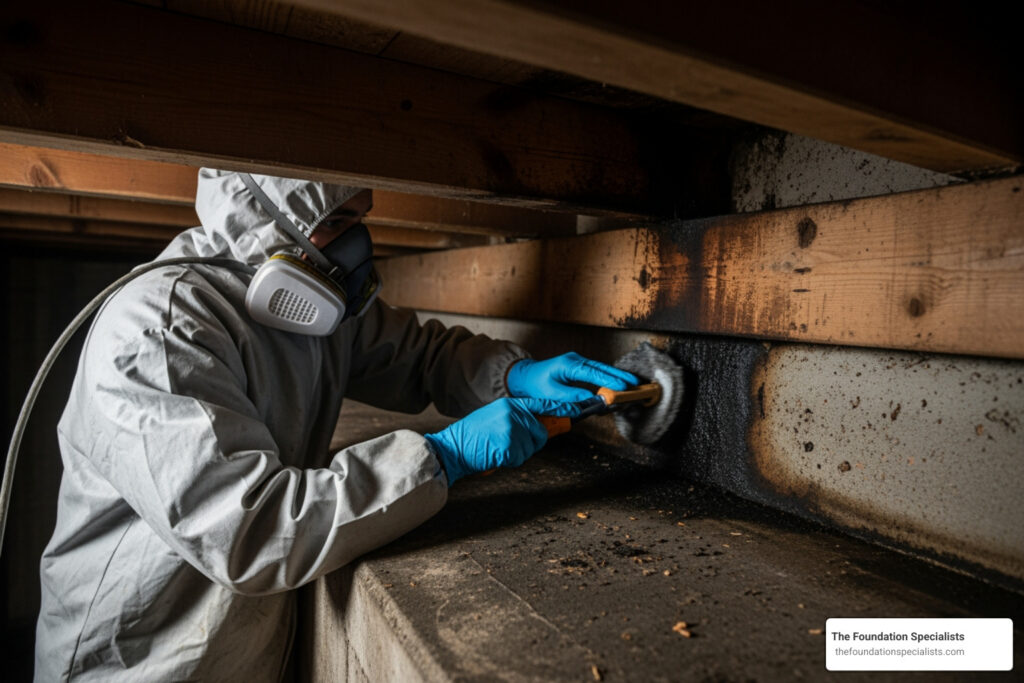
Why Crawl Space Mold Demands Immediate Action
Best mold remover for crawl spaces depends on your specific situation, but here are the top solutions:
Quick Answer:
- For minor spots on hard surfaces: White vinegar or 3% hydrogen peroxide spray
- For stubborn growth: EPA-registered fungicides like RMR-141 or Concrobium Mold Control
- For prevention after cleaning: Mold Armor Mold Blocker or similar inhibitors
- For wood joists: Acid-based cleaners or vinegar (avoid bleach)
- For large areas (10+ sq. ft.): Professional remediation required
If you’ve noticed a musty smell wafting up through your floors or spotted fuzzy growth during a crawl space inspection, you’re not alone. Crawl spaces are notorious breeding grounds for mold due to their naturally high humidity, poor ventilation, and darkness.
The stakes are higher than you might think. Mold in your crawl space doesn’t just stay there—it can trigger allergic reactions, worsen asthma, cause respiratory problems, and even lead to headaches and memory issues. Left untreated, it can also compromise your home’s structural integrity by deteriorating wooden joists and floor supports.
The good news? You have options. For smaller infestations (under 10 square feet), DIY solutions using household products or commercial mold removers can be effective. For larger problems, professional remediation is the safest route.
The key to success isn’t just choosing the right product—it’s addressing the underlying moisture problem. Without fixing leaks, improving ventilation, or controlling humidity, mold will keep coming back no matter how many times you clean it.
I’m Dylan Morris, Marketing Director at The Foundation Specialists, and I’ve spent years helping homeowners understand and solve foundation and crawl space issues, including identifying the best mold remover for crawl spaces for different situations. In this guide, I’ll walk you through everything you need to know to tackle this problem effectively and prevent it from returning.
Why Your Crawl Space is a Mold Magnet
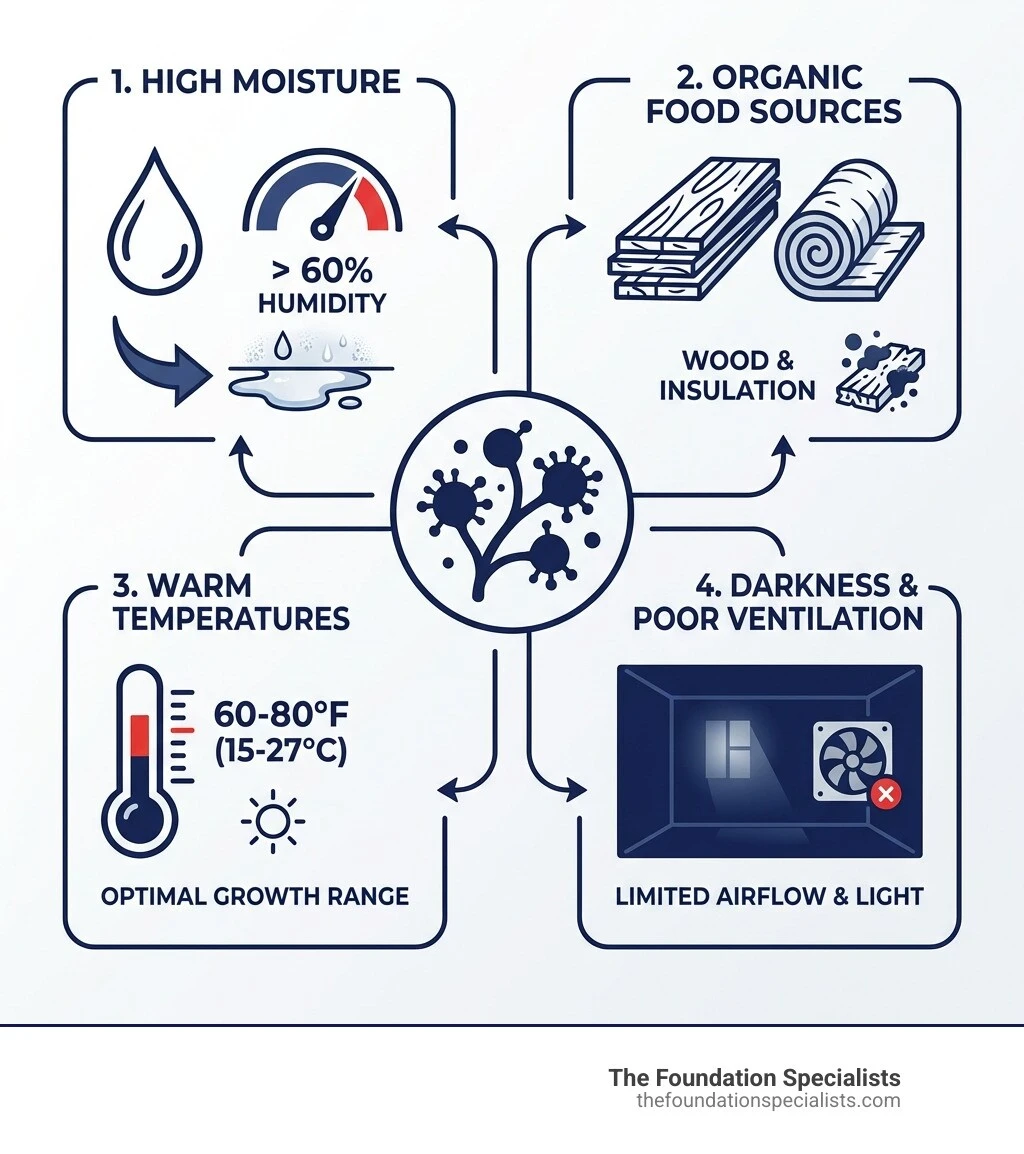
Crawl spaces are, unfortunately, perfect environments for mold to flourish. Mold thrives in areas with moisture, warmth, and organic material to feed on. Our experience across Tennessee, Alabama, Kentucky, and Indiana shows that homeowners frequently encounter mold issues in these often-neglected areas beneath their homes.
Causes of Mold in Crawl Spaces
Why are crawl spaces such a mold magnet? Several factors contribute to this persistent problem:
- High Humidity: Crawl spaces often suffer from high humidity due to poor ventilation. When humidity levels consistently rise above 60%, it creates an ideal breeding ground for mold spores.
- Poor Ventilation: Many crawl spaces are inadequately ventilated, trapping moist air. This lack of airflow prevents the space from drying out, even after minor moisture intrusion.
- Water Leaks: Plumbing leaks from pipes running through the crawl space, or leaks from the foundation itself, can introduce significant amounts of water.
- Foundation Cracks: Cracks in your home’s foundation can allow groundwater to seep into the crawl space, especially after heavy rains.
- Dirt Floors: Many older homes in our service areas have dirt crawl space floors. These dirt floors naturally retain moisture, which can then evaporate into the air, increasing humidity.
- Condensation: Uninsulated pipes or HVAC ductwork running through a crawl space can cause condensation to form when warm, moist air meets cool surfaces. This condensation provides the necessary moisture for mold growth.
- Flooding or Heavy Rainwater Accumulation: Any kind of flooding, whether from severe weather or poor exterior drainage, can leave standing water that quickly leads to extensive mold growth.
Signs of Mold in a Crawl Space
Mold can be sneaky, often growing out of sight. However, your senses can help you detect its presence:
- Musty Odors: This is often the first and most common sign. A persistent musty, damp smell—sometimes described as smelling like wet dog or old gym socks—wafting up into your living space is a strong indicator of mold.
- Visible Growth: While often hidden, you might spot visible mold growth on wooden joists, subflooring, insulation, or even foundation walls. Mold can appear in various colors, including white, gray, black, green, or even yellow, and may look fuzzy, slimy, or powdery.
- Warped or Sagging Floors: Mold can lead to wood rot, which in turn can cause structural components like floor joists to weaken. This may manifest as warped, sagging, or bouncy floors above the crawl space.
- Increased Allergy Symptoms: If you or your family members experience unexplained allergy-like symptoms indoors—such as sneezing, coughing, itchy eyes, or a runny nose—it could be due to mold spores circulating from the crawl space into your home’s air.
- Pest Infestations: Damp, moldy environments also attract pests like rodents and insects, which thrive in such conditions.
Health Risks Associated with Crawl Space Mold
It’s crucial to understand that mold isn’t just an aesthetic problem; it poses significant health risks. Mold spores travel through the air, and when conditions are right, they can grow rapidly and become a serious health concern. Exposure to mold can lead to a number of health problems, including:
- Allergic Reactions: For many, mold acts as an allergen, triggering sneezing, runny nose, red eyes, skin rash, and other allergic responses.
- Respiratory Issues: Mold exposure can worsen asthma symptoms in people with asthma and cause breathing difficulties, coughing, and wheezing in others.
- Headaches and Irritation: Prolonged exposure can lead to headaches, eye irritation, and throat irritation.
- Other Symptoms: In some cases, mold exposure has been linked to memory loss, depression, and even neurological problems.
Due to these potential health risks, we always recommend caution when dealing with mold. The EPA provides comprehensive information on the health risks associated with mold.
Safety First: Essential Gear and Precautions for Mold Removal
Before you even think about grabbing a spray bottle, safety should be your absolute top priority. Crawl spaces are tight, often dark, and can be filled with mold spores and other hazards. When dealing with mold, especially in a confined space, protecting yourself is non-negotiable.
Here’s the essential gear you’ll need and the precautions we recommend:
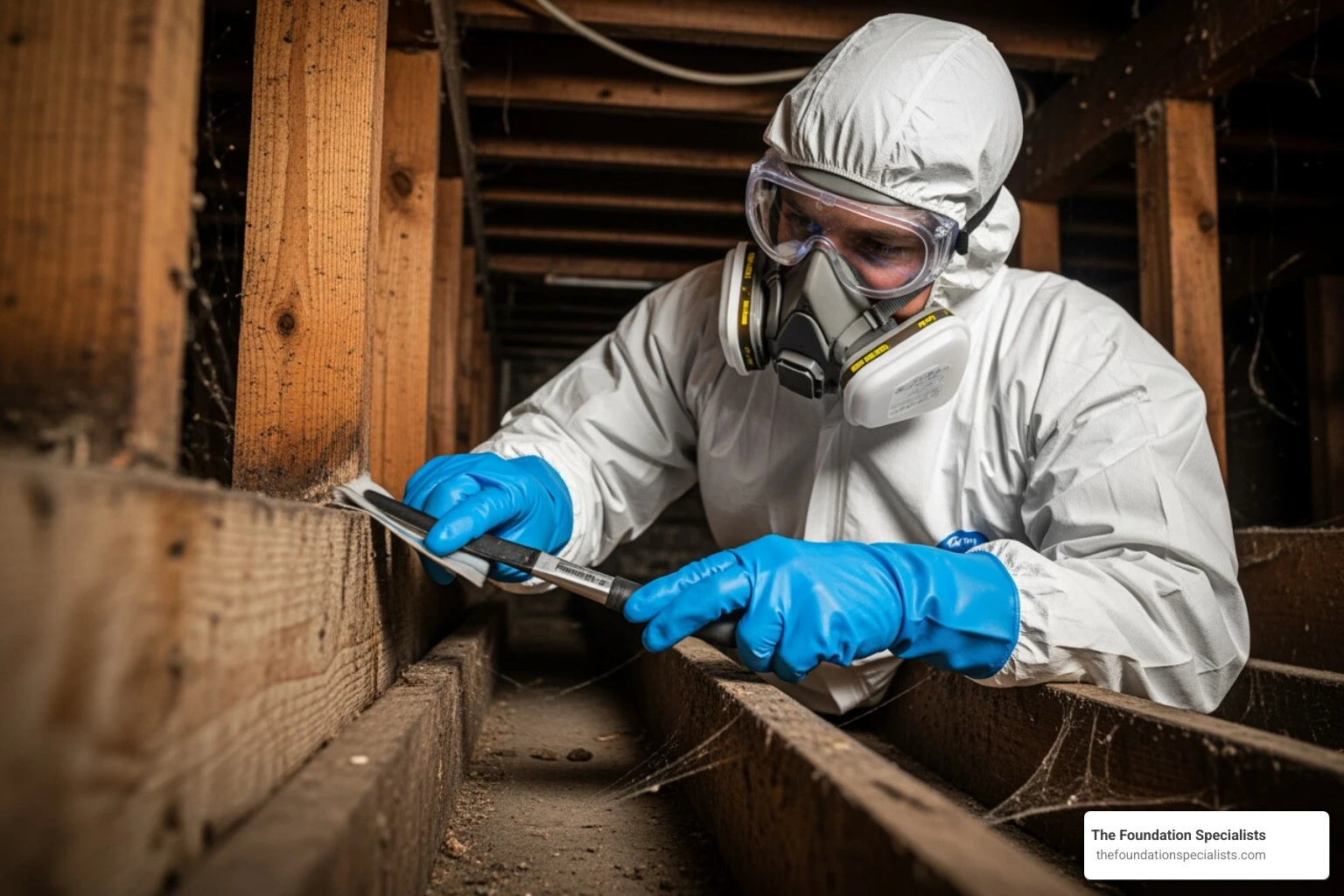
Personal Protective Equipment (PPE)
- N-95 respirator: A simple dust mask will not protect you from mold spores. An N-95 respirator is vital to prevent inhaling airborne spores, which are respiratory irritants and allergens. Make sure it fits snugly over your nose and mouth.
- Goggles or Eye Protection: Mold spores can irritate your eyes. Wear sealed goggles to protect your eyes from contact with spores and cleaning solutions.
- Protective Gloves with Long Cuffs: Chemical-resistant gloves are essential. Long cuffs protect your forearms from contact with mold and chemicals.
- Long-Sleeved Shirt and Long Pants: Wear clothing that covers as much skin as possible to prevent mold spores from irritating your skin.
- Waterproof Boots: Protect your feet from moisture and chemicals.
Ventilation and Containment
- Ensure Proper Ventilation: When working in a crawl space, ventilation is key. Use fans to direct air out of the crawl space and away from your home’s living areas. If possible, open any crawl space vents (though we’ll discuss why these aren’t ideal long-term later).
- Sealing Off the Area: To prevent mold spores from spreading to other parts of your home, seal off the crawl space from your living areas. You can use plastic sheeting and tape to create a barrier at the entrance to the crawl space.
Handling Mold Safely
- Wet Mold Before Cleaning: Dry mold spores are easily disturbed and can explode into the air if you try to scrub them dry. Always wet the moldy area thoroughly with your chosen cleaner before you start scrubbing. This helps to contain the spores.
- Work Methodically: Clean from top to bottom to prevent spores from contaminating already cleaned areas.
- Dispose of Contaminated Materials Properly: Any tools used for mold remediation, such as brushes or sponges, should be discarded to prevent spore spread. If soft materials like insulation or drywall are heavily contaminated with mold, they often need to be removed and discarded, not just cleaned. We recommend double-bagging these materials in heavy-duty plastic bags before disposal.
- Take Breaks: Working in a crawl space can be physically demanding and exposure to cleaning chemicals or mold spores can be fatiguing. Take frequent breaks in fresh air.
- Wash Up Immediately: After you finish, wash your clothes immediately in hot water and soap to remove any lingering spores. Take a shower to clean any spores off your skin and hair.
By following these safety guidelines, you can significantly reduce the risks associated with DIY mold removal in your crawl space.
A Guide to the Best Mold Remover for Crawl Spaces
Navigating mold removers can feel overwhelming, but we’re here to simplify it. The best mold remover for crawl spaces isn’t a one-size-fits-all solution; it depends on the severity of the growth, the type of surface, and your comfort level with chemicals. This section will break down the top categories of mold removal products, explaining what they are, how they work, and what situations they are best for.
For Minor Spots: DIY Household Solutions
For small areas of mold (less than 10 square feet) and if you’re comfortable with a DIY approach, common household products can be surprisingly effective. They are generally non-toxic and safe to use around children and pets, making them a popular choice for minor issues.
| Product | Effectiveness | Surface Type (Porous vs. Non-Porous) | Safety & Limitations /image.png)
For Stubborn Growth: EPA-Registered Fungicides
When facing more widespread or persistent mold, or if you’re uncomfortable with DIY methods, several commercial products offer a more potent solution. These are particularly useful for non-porous surfaces or for comprehensive cleaning. We always prioritize products that are EPA-registered, meaning they’ve been evaluated for safety and efficacy.
- RMR-141 Mold and Mildew Killer: This is a powerful, multi-purpose solution. RMR-141 is EPA Registered and kills 99% of household bacteria and viruses, targeting 140 microorganisms. It acts as a germicide, disinfectant, cleaner, fungicide, mildewstat, and virucide. While strong, it’s highly effective for tackling stubborn mold and messes on various surfaces. Proper ventilation is crucial when using powerful chemical cleaners. You can find RMR-141 Disinfectant for purchase.
- Concrobium Mold Control Cleaner: This product is highly regarded for its ability to eliminate mold and musty odors without harsh chemicals. It works by crushing mold spores as it dries, forming an invisible antimicrobial shield that prevents future mold growth. Concrobium is effective on a wide range of surfaces, including wood, drywall, concrete, and fabric. For large areas, the Concrobium Mold Control Fogger can eliminate mold and musty odors in spaces up to 2,800 sq. ft. per gallon. The EWG’s Guide to Healthy Cleaning | Concrobium Mold Control Cleaner Rating here provides more information, and you can purchase Concrobium Mold Control Cleaner from Amazon, click here.
- Bioesque Botanical Disinfectant Solution: If you’re looking for an excellent and safe alternative, Bioesque is a botanical disinfectant that kills fungi and mold within 3 minutes. It’s also effective against bacteria and viruses, including COVID-19. This product is a great choice for those seeking a powerful cleaner with a focus on safety. You can purchase Bioesque Botanical Disinfectant Solution.
For Lasting Protection: Mold Inhibitors and Preventative Sprays
After you’ve successfully removed existing mold, the next critical step is to prevent its return. Mold inhibitors and preventative sprays are designed to create an environment where mold can’t thrive, offering a long-lasting defense.
- Mold Blockers: These products typically leave an invisible, protective barrier on surfaces that inhibits future mold growth. They are ideal for applying to surfaces like wood joists, subflooring, drywall, and concrete after remediation.
- Mold Armor Mold Blocker: This is a popular choice for prevention. It cleans and blocks mold, leaving behind a protective barrier that can inhibit future growth for up to three months on fabrics and seven days on non-porous surfaces. It also helps remove musty odors. Applying a product like Mold Armor Mold Blocker after cleaning can significantly reduce the chances of recurrence.
These preventative measures are crucial for maintaining a mold-free crawl space, especially in our humid climate across Tennessee, Alabama, Kentucky, and Indiana.
When to Skip DIY and Call a Professional
While we’ve provided effective DIY solutions for small mold issues, there are clear situations where professional intervention isn’t just recommended—it’s essential. Knowing when to call in the experts can save you time, money, and potential health risks.
Here’s when we strongly advise you to skip the DIY approach and call a professional mold remediation company like The Foundation Specialists:
- The 10 Square Foot Rule: This is a widely accepted guideline from the EPA. If the mold affects an area larger than 10 square feet (roughly a 3×3 foot patch), it’s best to call in professionals. Widespread mold growth indicates a more significant moisture problem that requires specialized equipment and expertise to address safely and effectively.
- Widespread Mold Growth: Beyond the 10-square-foot rule, if mold is visibly growing across multiple surfaces, or if you suspect it’s hidden behind walls or under flooring, it’s a job for the pros.
- Mold in Your HVAC System: If mold has infiltrated your home’s heating, ventilation, and air conditioning (HVAC) system, it can spread spores throughout your entire house, posing a severe health risk. This requires specialized cleaning and sanitization by professionals.
- Suspected Toxic Black Mold: While many molds are harmless, if you suspect the presence of toxic black mold (Stachybotrys chartarum), it’s crucial to avoid disturbing it. This specific type of mold requires professional remediation due to its potential for producing mycotoxins.
- Structural Damage: If mold has led to soft, decaying, or structurally compromised wood joists or subflooring, the issue extends beyond simple cleaning. Professionals can assess the damage and recommend appropriate repairs or replacements.
- Recurring Mold Issues: If you’ve tried to clean mold yourself, but it keeps returning, it’s a clear sign that the underlying moisture problem hasn’t been adequately addressed. Professionals can identify and fix the root cause more effectively.
- Health Concerns: If you or your family members have pre-existing allergies, asthma, or are immunocompromised, even small mold remediation projects can pose a significant health risk. It’s always best to leave mold removal to the pros in these situations to ensure your safety.
Professional mold remediation companies have the necessary training, specialized equipment (like HEPA vacuums, air scrubbers, and industrial dehumidifiers), and experience to safely contain, remove, and prevent mold from returning. They can also properly dispose of contaminated materials and address the source of moisture, which is the ultimate key to a permanent solution.
How to Prevent Mold from Returning for Good
Removing existing mold is only half the battle. To achieve a permanently mold-free crawl space and protect your home and health for the long term, you must address the root causes of moisture. This is where prevention truly shines, and it’s a core part of what we do at The Foundation Specialists.
Here are the most effective strategies we recommend for preventing mold from returning to your crawl space:
- Moisture Control is Paramount: Mold simply cannot grow without moisture.
- Fix Leaks Promptly: Regularly inspect plumbing pipes, both supply and drainage lines, for any signs of leaks. Even small drips can contribute significantly to humidity.
- Improve Drainage: Ensure your home’s exterior drainage is effective. Gutters and downspouts should direct water away from your foundation, preferably at least 5-10 feet. Consider installing French drains if you have persistent water accumulation around your foundation.
- Install a Dehumidifier: A crawl space dehumidifier is a game-changer for controlling humidity levels. We aim to keep humidity below 50% in the crawl space to prevent mold growth. A high-quality, self-draining dehumidifier specifically designed for crawl spaces will automatically maintain optimal humidity levels.
- Install a Vapor Barrier: For dirt crawl space floors common in our region, a heavy-duty vapor barrier is essential. This thick plastic sheeting (we recommend 6-mil or thicker) covers the entire crawl space floor and extends up the foundation walls. It blocks moisture from the ground from evaporating into the crawl space air.
- Crawl Space Encapsulation: This is the ultimate solution for long-term mold prevention. Encapsulation involves completely sealing off the crawl space from the outside environment. This includes:
- Sealing Vents: Closing off existing crawl space vents, which often allow humid, outside air to enter, making the problem worse.
- Installing a Heavy-Duty Vapor Barrier: As mentioned above, covering the floor and walls.
- Sealing All Gaps and Penetrations: Sealing around pipes, wires, and other entry points to create an airtight seal.
- Installing a Dehumidifier: To actively control the internal humidity.
- Insulating Pipes and Ducts: To prevent condensation.
Encapsulation transforms a damp, problematic crawl space into a dry, conditioned environment, effectively eliminating the conditions mold needs to grow. It also helps improve indoor air quality throughout your home.
- Insulating Pipes: Uninsulated pipes can lead to condensation, providing an easy moisture source for mold. Insulating them helps prevent this.
- Regular Inspections: Even with the best prevention strategies, we recommend regular inspections of your crawl space every 3-6 months. This allows you to catch any new issues (like new leaks or a malfunctioning dehumidifier) before they escalate into a mold problem.
By implementing these comprehensive prevention strategies, especially crawl space encapsulation, you can ensure that your crawl space remains dry, healthy, and mold-free for years to come.
Frequently Asked Questions about Crawl Space Mold Removers
We often hear similar questions from homeowners across College Grove TN, Louisville KY, and beyond regarding crawl space mold. Here are some of the most common ones, along with our expert answers:
What is the best mold remover for crawl spaces with wood joists?
For wooden surfaces like joists, subflooring, and other structural wood, we generally recommend white vinegar or acid-based cleaners. Vinegar is more effective than bleach for porous surfaces because it can penetrate deeper into the wood to kill the mold roots. Mix equal parts white vinegar and water in a spray bottle, spray the affected area thoroughly, let it sit for at least 15 minutes (up to an hour), then scrub with a stiff brush and wipe clean. You can add 5 to 10 drops of tea tree essential oil to the vinegar spray for increased disinfectant power.
Important Considerations for Wood:
- Avoid Bleach: Bleach is highly corrosive and can damage wood fibers, potentially weakening structural components. Its fumes are also dangerous in confined spaces.
- Do Not Oversaturate: While you want to wet the mold, avoid completely saturating the wood. Too much moisture can cause unsealed wood to swell and crack, and ironically, contribute to future mold issues if not dried properly.
- Ensure Thorough Drying: After cleaning, it’s critical to dry the wood completely. Use fans and a dehumidifier to ensure the wood dries out quickly and thoroughly to prevent new mold growth.
For more stubborn mold on wood, acid-based cleaners designed for mold removal on wood surfaces can be effective. Always follow product instructions carefully and ensure proper ventilation.
What is the best mold remover for crawl spaces with concrete floors?
Concrete is a non-porous surface, which gives you more options for mold removal.
- Bleach-Based Cleaners (with caution): A solution of one cup of bleach to one gallon of water can be effective for killing mold on concrete. Bleach is a powerful disinfectant and can whiten stained concrete. However, always use with extreme caution, ensure maximum ventilation, and wear full PPE due to the strong, potentially harmful fumes. Do not use bleach near wooden elements due to its corrosive nature.
- EPA-Registered Fungicides: Products like RMR-141 are excellent choices for concrete. They are designed to kill a wide spectrum of microorganisms and clean effectively. These products often have strong chemical odors, so ventilation remains key.
- Scrubbing and Rinsing: Regardless of the cleaner you choose, physical scrubbing with a stiff brush is often necessary to remove mold from the textured surface of concrete. After scrubbing, rinse the area thoroughly with clean water.
- Address Moisture: Simply cleaning the concrete won’t solve the problem if moisture is still coming through. Implementing a vapor barrier on your dirt floor (if applicable) or sealing concrete cracks is crucial to prevent mold from returning.
Can I just spray for mold and leave it?
No, simply spraying for mold and leaving it is a temporary fix at best, and often ineffective in the long run. Here’s why:
- Mold Spores Remain: While a spray might kill the visible mold, the dead mold spores and their byproducts can still be allergenic and harmful. You need to physically remove them. Think of removing mold like removing dirt: you wouldn’t just spray dirt with a cleaner and call it clean! You have to remove the dirt from the surface.
- Doesn’t Address the Root Cause: The biggest limitation of just spraying is that it doesn’t fix why the mold grew in the first place. Mold will return if the underlying moisture issue isn’t resolved. This could be high humidity, a leak, or poor ventilation.
- Temporary Solution: Sprays like bleach, vinegar, and hydrogen peroxide are temporary fixes for crawl space mold. Without addressing the moisture source, mold will almost certainly regrow, often within weeks or months.
For a true, lasting solution, you must physically remove the mold after wetting it, and most importantly, identify and eliminate the source of moisture. If you don’t tackle the moisture, you’ll be locked in a frustrating cycle of spraying and watching the mold reappear.
Conclusion: Achieve a Permanently Mold-Free Home
Tackling mold in your crawl space might seem daunting, but with the right knowledge and tools, you can effectively address the issue. We’ve explored various options for the best mold remover for crawl spaces, from DIY household solutions for minor spots to powerful EPA-registered fungicides for more stubborn growth, and preventative sprays for lasting protection.
The most crucial takeaway is this: simply cleaning the mold is a temporary fix. Mold will persistently return unless you identify and eliminate the underlying moisture problem. This means fixing leaks, improving drainage, controlling humidity with a dehumidifier, and, most effectively, implementing a robust vapor barrier and full crawl space encapsulation.
For homeowners in Tennessee, Alabama, Kentucky, and Indiana, a dry, healthy crawl space is vital for your home’s structural integrity and your family’s health. While DIY methods can handle small, superficial mold, widespread or recurring mold issues demand a professional approach.
At The Foundation Specialists, we bring over 20 years of trusted experience to home repair services. Our professional execution and exceptional customer service ensure that we not only remove mold but also provide comprehensive, permanent solutions to prevent its return. For a comprehensive and permanent solution to crawl space mold, consider professional crawl space encapsulation services.